The Space That Belongs to Them
October 7, 2026 • 5 min read
Not every form of closeness begins by moving nearer. Sometimes it begins by leaving something alone.
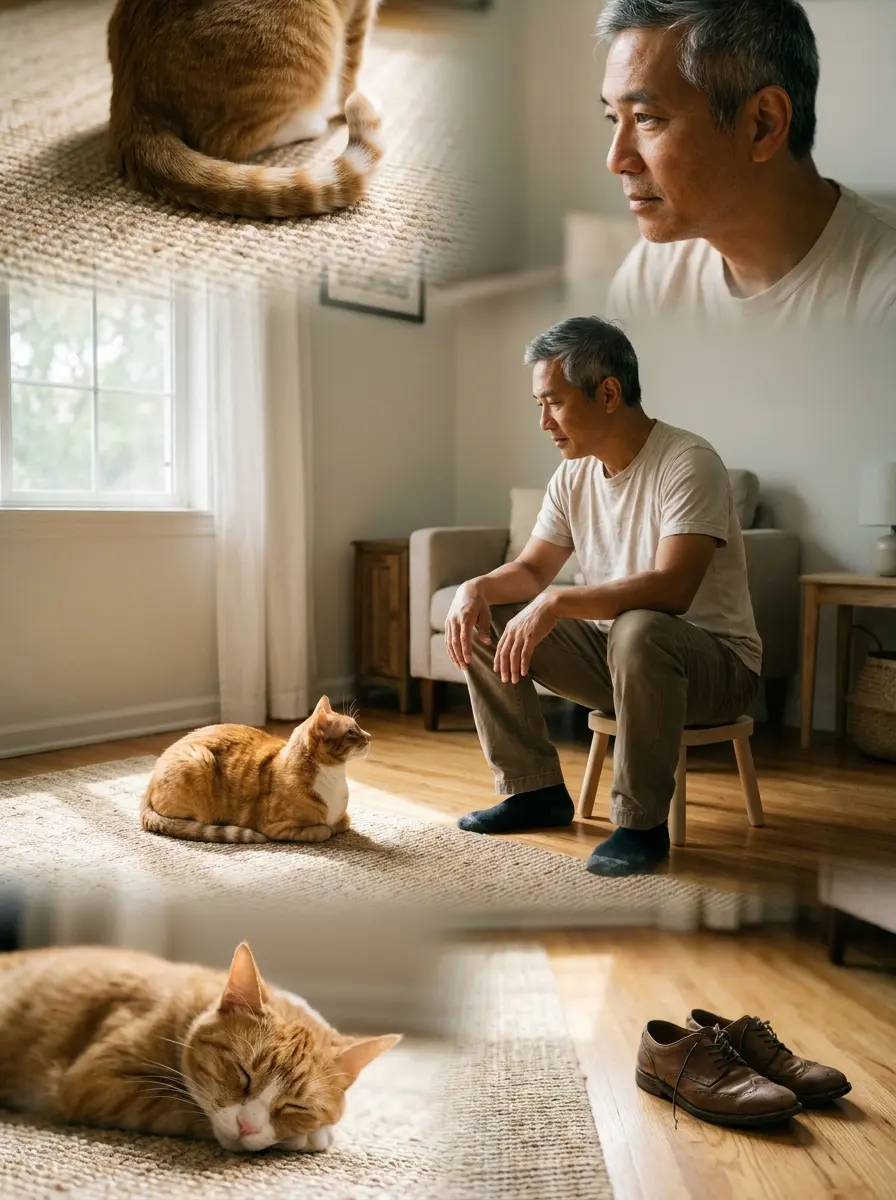
A quiet corner. A stretch of floor. A place that remains available without becoming an invitation, a test, or a stage for interaction.
Protecting that kind of space can feel almost paradoxical. You care, so you want to engage. You are interested, so you want to approach.
You want the relationship to grow, so you want something to happen. And yet the space itself may ask for the opposite. Not absence.
Restraint. There is a difference between being available and being intrusive.
That difference can be easy to miss because attention often wants expression. Once affection is present, simply allowing another living being to look, pause, remain, or withdraw can seem passive. It can feel as though nothing is happening.
But “nothing” is often a human description of a moment we are not controlling. The space may remain quiet. The companion may simply observe.
There may be no visible movement toward you, no contact, no obvious sign that the protected space is producing anything at all. That can make it difficult to resist filling the silence. A voice.
A gesture. An approach. A hand entering the space.
A small attempt to encourage interaction. Each action may seem harmless from the human side. The deeper question is what changes the moment the quiet place stops belonging entirely to observation and begins belonging partly to our desire for response.
That shift can happen very subtly. A space created for the companion can become a space we begin monitoring. Did they use it?
Did they look more relaxed? Did they stay longer? Did anything change today?
The place remains physically undisturbed while becoming crowded with expectation. That is a different kind of disturbance. It does not require noise.
It does not require movement. It can exist entirely inside the person waiting for the space to produce meaning. Then protection becomes difficult in a new way.
The task is no longer only to preserve quiet around the companion. It is also to notice what we want the quiet to give us. Perhaps reassurance.
Perhaps evidence. One possibility is that some indication that the distance between two lives is changing. Those desires may be understandable.
But they are still ours. The protected space belongs to the companion’s observation precisely because it does not need to answer those desires. That may be what makes it so difficult to leave intact.
We tend to understand spaces through use. A chair is for sitting. A doorway is for passing through.
A room is for activity. A protected quiet place can resist that logic. Its purpose may not be visible in action.
Its value may not appear through a measurable event. It may simply remain available. That can make the human mind restless.
We are accustomed to recognizing progress through change. A quiet space may offer repetition instead. The same distance.
The same stillness. The same absence of invitation. Day after day, the space may look almost identical.
And still, the commitment to leave it undisturbed remains. Observation teaches patience. Patience here does not need to mean waiting for a reward.
It may mean allowing observation to remain observation without demanding that it become approach, touch, affection, or proof. That distinction matters. The moment observation is treated as merely the first step toward something we prefer, the space is no longer quite neutral.
It becomes transitional. Temporary. A place whose legitimacy depends on eventually producing closeness.
But what if its value does not depend on what comes next? What if the protected space is not a waiting room for the relationship? What if it is simply part of the relationship?
That question changes the emotional weight of the quiet. It asks whether a companion can be given room that does not need to justify itself. No performance.
No visible progress. No obligation to make the human feel included. There is something demanding in that idea because affection naturally wants participation.
To care without entering can feel incomplete. To remain nearby without becoming the center of attention can feel strangely unfamiliar. To protect a space without claiming any of it for yourself may expose how easily care and access become entangled.
We may think: If I love, I should be allowed closer. If I am patient, eventually the distance should shrink. If I provide safety, there should be some visible answer.
Yet none of those expectations can be confirmed by the quiet space itself. The space makes no promises. It does not tell you what the companion feels.
It does not tell you whether tomorrow will look different. It does not tell you what this protected stillness will become. It simply remains.
And perhaps remaining is the hardest part. Because an undisturbed place asks the human side of companionship to tolerate not being necessary in every moment. That can feel more vulnerable than it sounds.
We often understand love through presence. But presence does not always require entering. Sometimes presence may include respecting a boundary so completely that the boundary does not have to defend itself.
The difficulty is that this cannot be turned into a formula. A protected space is not proof of understanding. It is not a guarantee of trust.
It is not a strategy that promises a particular result. Once those promises are attached to it, the space begins carrying a purpose beyond itself. The quiet becomes conditional.
The restraint becomes transactional. The patience becomes a countdown. Then the place is no longer fully protected from us.
It may be that the unresolved work lies here. Can we preserve a space without asking it to reward us? Can we let observation remain private even while we are the ones protecting the quiet around it?
Can affection make room for a companion’s distance without immediately treating that distance as something temporary? There is no need to answer too quickly. The space can stay quiet.
The companion can keep observing. And we can remain outside that protected distance without knowing what, if anything, the silence will eventually make possible.