Before Closeness Is Given
October 3, 2026 • 5 min read
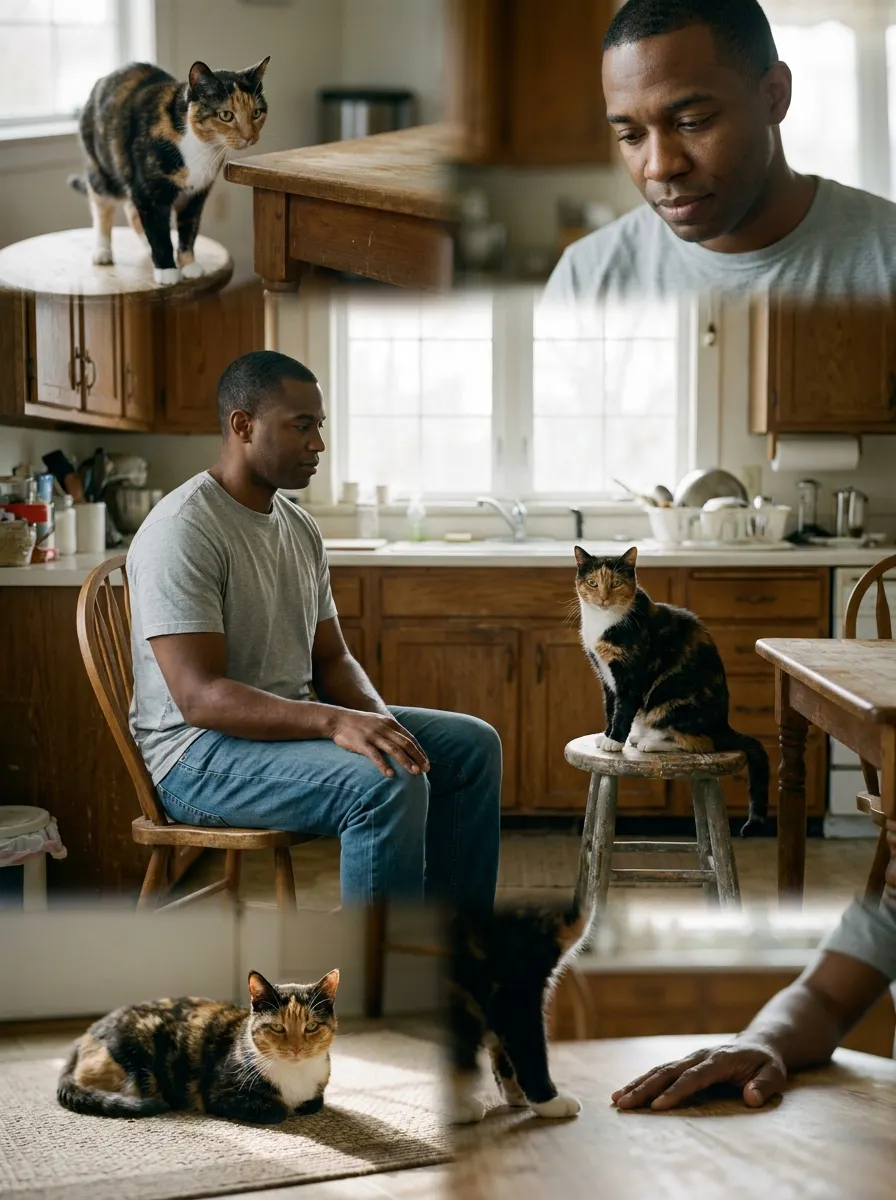
Affection has a way of wanting to move closer. There is something deeply human in that movement. When another living being matters to us, distance can feel like an unfinished sentence, while nearness seems to promise a kind of completion.
We want to shorten the space. Sometimes the impulse feels so natural that we barely notice it as an impulse at all. Closeness appears good, warmth appears good, affection appears good, and moving nearer can therefore seem almost beyond question.
But physical proximity contains a quiet complication. It is possible to want closeness before closeness has been offered.
That difference can be difficult to sit with because affection rarely experiences itself as pressure. From the inside, wanting to approach may feel tender, generous, even loving. The intention can feel uncomplicated.
The space between two living beings may not be.
There is a distinction between closeness we desire and closeness that has actually become shared. One belongs to our longing. The other belongs to a relationship that cannot be occupied by one side alone.
Perhaps this is where the urge to move closer becomes worth noticing. Not condemning. Not correcting.
Simply noticing. The desire for contact can carry its own momentum. Once we want proximity, waiting may begin to feel like doing nothing, as though affection becomes meaningful only when the distance finally disappears.
Yet distance is not empty merely because it remains distance. Something is still present there: another living being who has not yet crossed it. That fact does not tell us why.
It does not tell us what the distance means, how long it will remain, or whether it will eventually change. Those answers cannot be supplied simply because uncertainty makes us uncomfortable. And uncertainty can be especially uncomfortable when the next movement seems so small.
Just a little closer. Just a little more contact. Just enough to make the relationship feel the way we hoped it might feel.
The language of “just” can make the remaining distance seem insignificant. But the significance of a boundary cannot be measured only by how small it looks from our side of it. There may be a quiet temptation to treat physical proximity as proof.
Proof of affection. Proof of trust. Proof that the relationship is becoming what we wanted it to become.
Once closeness begins carrying that kind of weight, waiting for it may become more difficult. The space no longer feels like simple space; it begins to hold all the reassurance we have attached to what might happen if it closes. Then wanting to touch can become entangled with wanting to know.
Wanting to know that we are accepted. Wanting to know that the connection is real. Wanting to know that our affection has somewhere to land.
None of those desires automatically explain the companion in front of us. They reveal something about the human side of the distance.
That is an important difference because physical closeness can easily become a place where two separate realities are mistaken for one. We may experience the desire to approach so strongly that our readiness begins to feel like shared readiness. But our willingness does not necessarily answer the other side.
Our tenderness does not answer it. Our patience up to this point does not answer it. Even our certainty that we mean no harm does not answer it.
The unresolved part remains unresolved. Observation teaches patience.
Patience here need not become a moral achievement or a performance of restraint. It may simply be the capacity to remain aware of the distance without immediately deciding that affection gives us permission to erase it. That can expose an uncomfortable question.
What does closeness mean when it must be given rather than taken? The word “given” changes the shape of proximity.
It makes nearness something relational rather than something one participant can complete alone. The space between two lives is no longer merely an obstacle between affection and its expression. It becomes part of the relationship itself.
That may be difficult because waiting does not produce the visible satisfaction that contact does. There is no obvious moment to hold, no immediate physical confirmation, no simple assurance that patience is leading somewhere. Waiting leaves the future unavailable.
And perhaps that is precisely why the urge to force proximity can become so strong. Not necessarily because the distance is large, but because distance refuses to promise what comes next. Physical affection feels concrete.
Waiting does not. The hand that wants to move closer knows exactly what it wants to do. The person who chooses not to cross the remaining space may have nothing equally tangible to replace that movement with.
Only attention. Only uncertainty. Only another moment in which closeness has not yet been invited.
There can be tenderness in that incompleteness, but there is no need to turn it into reassurance. The distance does not have to become beautiful in order to be respected. Nor does waiting have to guarantee a future reward.
Otherwise patience quietly becomes another form of transaction: I will hold back now because eventually I expect access later. That expectation can bring us back to the same place by a different route. The unresolved question is not only whether physical closeness will come.
It may also be what happens to affection when closeness remains unavailable to us in the present. Can affection remain affection without immediately becoming contact? Can care exist inside space?
Can wanting to move nearer coexist with the recognition that nearness is not ours to declare? There is no need to turn those questions into rules. They may remain questions because the relationship itself remains unfinished.
Perhaps the most difficult part is accepting that physical distance does not offer us enough information to complete its meaning. We can notice the urge to shorten it, notice our impatience with what has not been invited, and still remain without a conclusion. The companion remains on the other side of the space.
We remain on ours. And between those two positions is something that cannot be completed by desire alone: the unanswered possibility of closeness that has not yet been given.