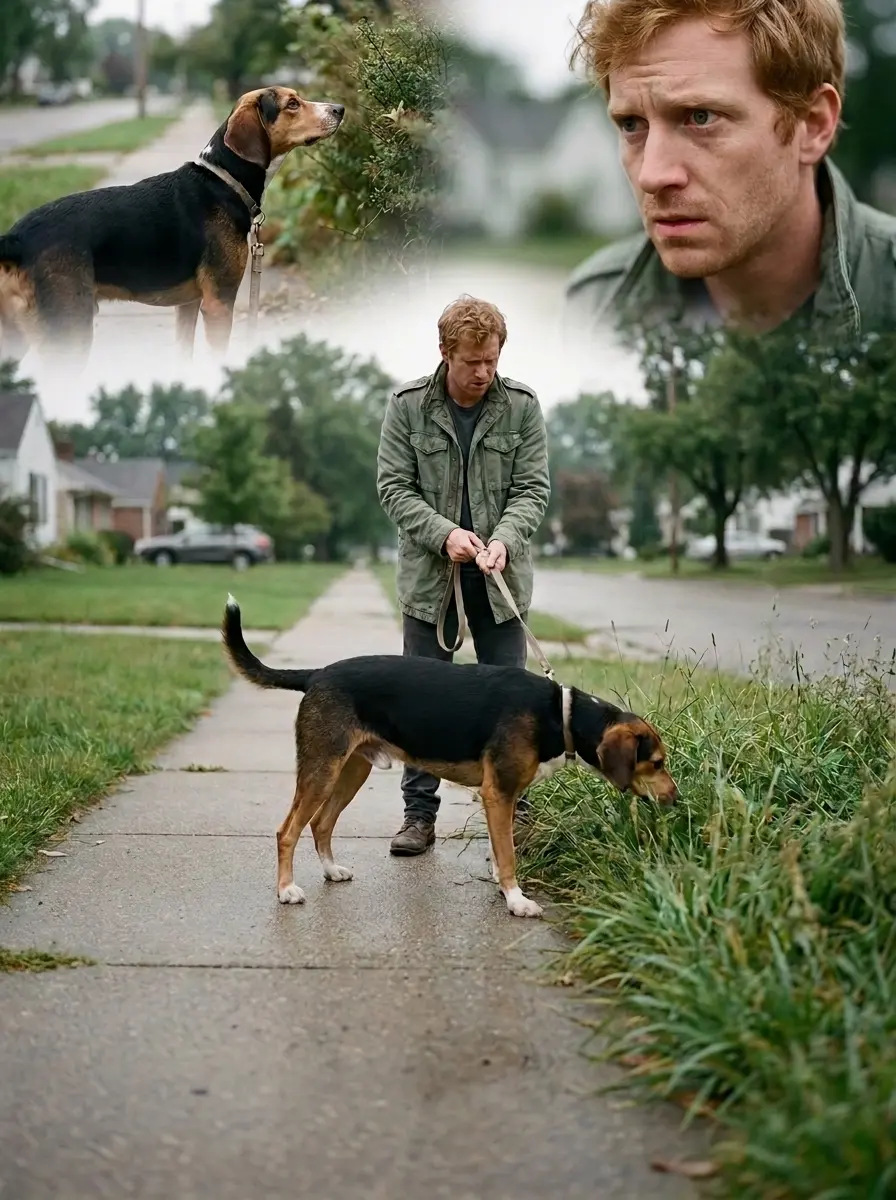
When Care Starts Reaching for Control
November 21, 2026 • 4 min read
Caring deeply about another living being can make uncertainty unusually difficult to leave alone. Attention becomes sharper, small changes feel more noticeable, and the space between observing something and wanting to do something about it can begin to narrow. That tension sits close to resisting the human impulse to over-manage a companion’s natural behaviors out of anxiety.
The difficulty is not simply that management exists, but that anxiety can make intervention feel almost indistinguishable from care. Once that happens, ordinary behavior may become harder to allow to remain ordinary. A movement, preference, hesitation, burst of energy, withdrawal, repetition, or change in rhythm can begin to feel as though it requires immediate interpretation.
Attention itself is not the problem. The uneasiness appears when attention starts carrying an invisible demand: understand this now, decide what it means, determine whether it should continue, find the correct response. What began as noticing can slowly become an attempt to remove uncertainty from the relationship.
That urge can feel responsible precisely because the relationship matters. Care creates involvement. Involvement creates choices.
And choices made on behalf of another living being can carry a weight that makes uncertainty uncomfortable. Yet companionship also contains something that responsibility can never completely eliminate: another life remains another life. A companion has rhythms that are not created by human interpretation.
Preferences may appear without explanation. Behaviors may be visible without becoming fully understandable. Individuality does not disappear simply because affection makes us attentive to it.
That can create a quiet collision between closeness and control. The more significant the relationship becomes, the more tempting it may feel to protect it from ambiguity. If every behavior could be understood, anticipated, shaped, or placed within a reassuring interpretation, perhaps the relationship would feel less exposed to uncertainty.
But the wish to understand and the wish to control are not always the same thing, even when they begin very close together. Observation can remain beside what it does not yet understand. Control usually wants the unanswered space to close.
The distinction is subtle because both can look like intense attention. Both can involve watching closely. Both can arise in a relationship where responsibility is real.
Their posture toward uncertainty, however, may be different. Observation can notice without immediately turning the observed behavior into a problem. It can allow an individual life to remain partly unreadable.
Anxiety may find that incompleteness harder to tolerate. The question then becomes less about whether attention is good or bad and more about what attention is being asked to accomplish. Is it making room to perceive the companion more clearly, or is it being recruited to make uncertainty disappear?
There is no simple way to answer that from the outside. The same gesture can carry different meaning within different relationships, and no hidden motive needs to be assigned to either the human or the companion. The important tension remains at the level of interpretation: care may be present while the impulse to manage also becomes stronger.
That tension deserves room because genuine responsibility already carries limits. Responsibility can involve decisions without creating complete knowledge. It can create obligation without granting access to every hidden reason behind another being’s behavior.
“Because genuine responsibility does not grow from authority.”
That sentence changes the shape of the tension without settling it. If responsibility does not depend on authority, then perhaps the human role inside companionship cannot be measured simply by how completely behavior is directed, corrected, anticipated, or understood. Responsibility may exist alongside limits that control would rather erase.
Those limits can be uncomfortable. A companion remains capable of behaving in ways that do not fit neatly inside expectation. Natural behavior may interrupt preferred routines, resist interpretation, or simply remind the human observer that another living being is present rather than an extension of human intention.
The discomfort does not automatically mean intervention is wrong. Nor does restraint automatically become virtue. Those conclusions would be too easy, and the relationship is more complicated than either one.
What remains is the possibility that anxiety can quietly alter the meaning of responsibility. Care can begin asking for certainty. Attention can begin asking for control.
Protection can begin asking for predictability. None of those shifts need to be dramatic to matter. They may appear only as a growing difficulty in allowing behavior to exist before it has been judged, explained, or managed.
The companion remains the same individual, while the human experience of observing that individuality becomes more tense. That is where the relationship can feel especially vulnerable. Companionship asks for closeness to a life that cannot be completely possessed through understanding.
Even careful attention reaches a boundary where individuality remains intact. There may be affection on one side of that boundary and anxiety on the other, though even that division may be too clean. Perhaps they sometimes arrive together.
The unanswered part is what happens when responsibility begins to feel safest only when behavior becomes manageable. At what point does care remain attentive to another life, and at what point does anxiety begin asking that life to become easier to predict? The distinction may not reveal itself immediately.
It may remain inside the relationship as a question about attention itself: whether closeness can continue making room for a companion whose natural behaviors do not always become clearer simply because they matter deeply.