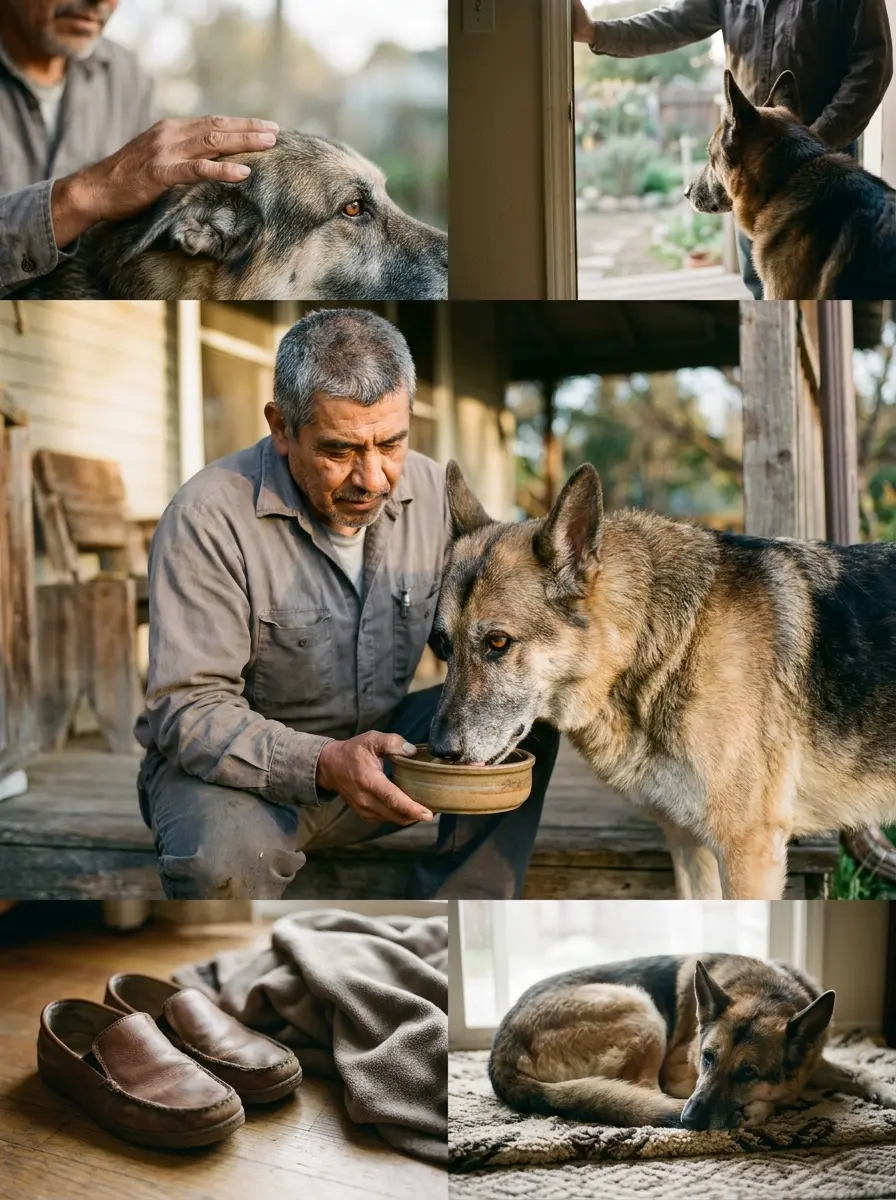
When Care Begins to Carry the Weight of Choosing
November 11, 2026 • 6 min read
Responsibility can feel very different when it becomes daily. A single decision can be considered, made, and eventually left behind. Daily decisions return, asking again for attention even when yesterday’s choice seemed reasonable at the time.
When those decisions concern the comfort of another living being, the weight can become unusually intimate. You are not only deciding what happens next; you are deciding while knowing that another life will live inside the consequences. That can make even ordinary choices feel larger than their visible form.
The word comfort sounds gentle. Responsibility does not always feel that way.
Comfort asks you to notice what seems supportive, what appears tolerable, what may preserve ease, rest, familiarity, or dignity. Yet the one making those judgments remains outside the other life’s complete experience. You can observe.
You can remain attentive. You can know a companion deeply. And still, some part of the decision belongs to a place you cannot fully enter.
That uncertainty is not necessarily a failure of care. It may simply be part of what it means to make choices for someone who cannot hand the responsibility back to you in the same language. The weight comes partly from that asymmetry.
You decide. The companion lives with what has been decided. Even when the decision is small, the relationship can make it feel morally larger because affection has made indifference impossible.
“Companionship deepens it.”
Responsibility may exist before companionship, but relationship changes its texture. What might otherwise feel like obligation can become personal because the life affected by the choice is no longer abstract. You know this companion.
You know the history already shared. You know enough for the decision to matter deeply, but perhaps never enough for certainty to become complete. That can create a difficult kind of closeness.
Care often wants reassurance that it is choosing correctly. Responsibility rarely offers that reassurance in perfect form. A decision can be thoughtful and still leave questions behind.
Was that enough? Was that too much? Did comfort increase, or did one form of difficulty simply become another?
Those questions do not automatically mean the choice was wrong. They may reveal that responsibility becomes heavier when no decision can be separated cleanly from uncertainty. The temptation is to imagine that sufficient attention should eventually produce certainty.
But another living being is not a puzzle that becomes fully solvable if observed carefully enough. Familiarity can deepen understanding without turning relationship into complete access. That distinction matters.
Without it, care can quietly become a search for perfect judgment. Every decision begins carrying the impossible expectation that love should somehow eliminate ambiguity. Yet love may be precisely what makes ambiguity harder to tolerate.
If the relationship mattered less, the uncertainty might feel lighter. Instead, every unanswered question remains close.
This is where daily decision-making can begin to alter the emotional atmosphere of companionship. The relationship is still built from presence, familiarity, and shared life, but responsibility may become increasingly visible inside those things. You notice yourself evaluating.
Reconsidering. Looking again. Wondering whether what seemed acceptable before still feels acceptable now.
The repetition can become its own form of burden. There may be no dramatic moment when responsibility changes. It can simply accumulate through choices that keep returning.
What is comfortable today? What remains appropriate now? What has changed enough that yesterday’s judgment no longer feels sufficient?
The questions are simple in wording and difficult in meaning. They can make care feel less like a settled role and more like an ongoing act of interpretation. And interpretation has limits.
The companion can communicate through presence, behavior, rhythm, response, distance, closeness, rest, refusal, acceptance, and countless other visible forms. But none of those signals necessarily provides a complete translation. So the person carrying responsibility may remain suspended between attentiveness and uncertainty.
That middle space can be exhausting without becoming dramatic. There may be no obvious crisis. Only the steady awareness that another life depends partly on judgments you must continue making without ever possessing perfect knowledge.
Perhaps that is why responsibility can feel heavier than action itself. The action may take moments. The question can remain much longer.
And because the decisions recur, yesterday’s uncertainty may not disappear before today’s arrives. This does not mean that responsibility is only a burden.
It can also be one of the clearest places where companionship becomes visible as commitment. Shared life is not sustained only through affection that feels warm or recognizable. It is also carried through decisions that may feel difficult, incomplete, and uncelebrated.
Still, even that thought cannot resolve the tension. Responsibility can deepen companionship while also making its limits impossible to ignore. You may want to protect comfort without imposing your own idea of what comfort means.
You may want to preserve dignity without confusing dignity with independence, activity, or any other single measure. You may want to remain responsive without allowing fear to make every choice feel urgent. None of those desires automatically supplies an answer.
They only make the responsibility more visible. Perhaps this is where the weight becomes most personal: the realization that caring for another life can require decisions that cannot be delegated back to the relationship itself. Affection cannot choose for you.
History cannot choose for you. Even familiarity cannot fully choose for you. At some point, attention becomes judgment.
And judgment, however careful, remains human. There can be humility in recognizing that.
Not the humility of becoming passive, and not the humility of pretending every decision is unknowable. Something quieter: accepting that responsibility can be real without becoming omniscient. You may still have to decide.
The absence of certainty does not remove that necessity. That is the contradiction at the center of the burden. You are required to act while knowing that perfect access to another’s experience is unavailable.
You carry responsibility precisely where certainty cannot be complete. Maybe companionship deepens responsibility because it removes the possibility of treating those choices as merely procedural. The companion is not an abstract recipient of care.
They are the familiar life whose presence has already entered your routines, your memory, your attention, and your sense of what home feels like. That familiarity can make every decision more intimate. It can also make every doubt more persistent.
The relationship may not offer a clean way out of that tension. It may be that it is not supposed to.
There may never be a point at which care becomes entirely free of questioning. Daily quality-of-life decisions may continue asking you to hold two realities together: another life deserves careful consideration, and your understanding of that life will always have limits. Neither truth cancels the other.
The responsibility remains. So does the relationship. And somewhere between them sits the unresolved question of how to make decisions for another’s comfort without pretending that love has granted you certainty it never promised.