When Their Past Has No Words
October 19, 2026 • 5 min read
Some histories arrive without explanation.
No complete account. No reliable sequence. No clear language for what came before.
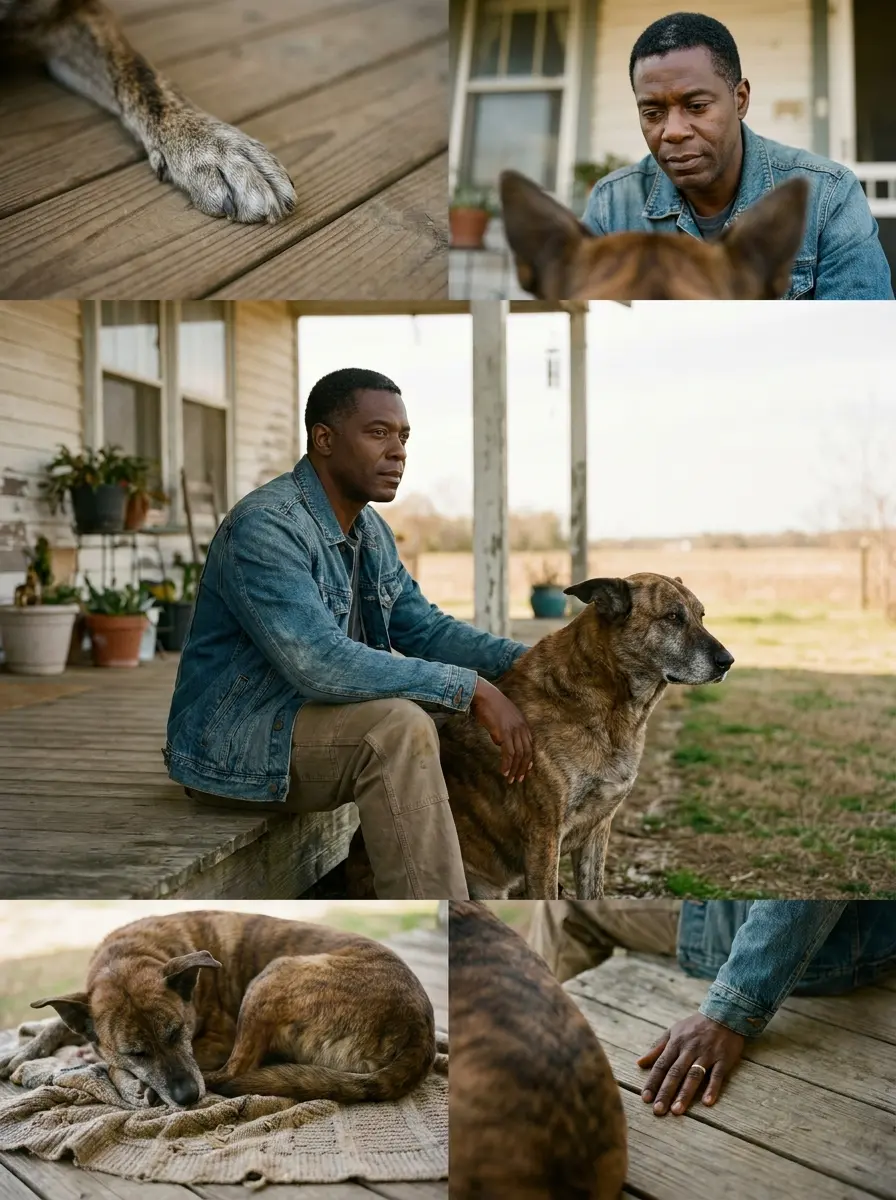
Only the companion who is here now. That absence can feel strangely heavy.
When a past is unknown, the mind often wants to fill the empty space around it. Silence invites possibility, and possibility can begin to feel almost like memory even when it belongs to no one who can confirm it. You may find yourself wondering what happened.
What was experienced. What was lost. What was learned.
And because none of those questions have clear answers, the responsibility can begin to shift. Not toward knowing the past. Toward carrying it.
That is a complicated burden. How do you care for a history you cannot see without turning imagination into fact? How do you honor what may have happened without claiming that it did?
How do you remain sensitive to the possibility of an unwritten past without allowing that possibility to become the companion’s entire identity? The unanswered space can pull in two directions. One direction says that the past must explain everything.
The other says that if nothing is known, the past should simply be ignored. Neither position is especially easy to inhabit. The first can make every present gesture feel like evidence of an invisible story.
The second can make the absence of information feel like permission to pretend there was no history at all. But a life does not become historyless simply because the record is incomplete.
“Every companion arrives carrying a history that has never existed before and will never exist again.”
That truth becomes more difficult when the history itself is partly hidden. The uniqueness remains. The certainty does not.
And perhaps that is where emotional responsibility becomes most demanding. You may feel accountable to something you cannot name. A hesitation may make you wonder about what preceded it.
A distance may seem to point backward. A small reaction may begin collecting imagined explanations. Yet the line between attention and invention is thin.
Care wants context. Silence refuses to provide enough. So the temptation is to create coherence where none is available.
A story can make the unknown feel manageable. The mind may decide that this happened or that caused it.
Maybe the past explains the present. Soon the imagined sequence can begin to feel almost protective. If the past can be explained, perhaps the present can be understood.
If the present can be understood, perhaps uncertainty will become easier to carry. But explanation is not the same as truth. And compassion does not require certainty to be real.
That may be one of the hardest things to accept. You can care deeply without knowing why a companion responds in a particular way. You can respect what may be behind a behavior without assigning an origin to it.
You can leave room for history without pretending you have access to it. The unknown does not have to be solved before it can be treated with seriousness. That changes the emotional weight of the past.
Instead of becoming a puzzle, it remains a boundary. There are things you may never know. Moments that may never be reconstructed.
Influences that may never become legible. That limitation can feel frustrating because responsibility often seems easier when it has information to work with. You know what happened, so you know what deserves care.
You know what was lost, so you know what should be protected. You know what caused the distance, so you know how to interpret it. But an unwritten past offers none of those conveniences.
It asks for sensitivity without supplying certainty. That can make every act of interpretation feel unusually consequential. If you assume too much, the companion may become trapped inside a story you created.
If you assume too little, you may feel as though you are failing to honor something important that came before you. There is no clean position between those two fears. Only attention.
Only restraint. Only the ongoing recognition that the companion in front of you is more than what you know about them. Perhaps that is where history becomes different from biography.
A biography can be told. A history may remain partly present even when it cannot be narrated. It may exist as absence.
As uncertainty. As unanswered questions that follow the relationship without ever becoming its center. The difficulty is deciding how much emotional responsibility belongs to what cannot be verified.
Too much, and the unknown past can begin governing the present. Every reaction becomes evidence. Every silence becomes a clue.
Every boundary becomes part of an invisible archive. Too little, and the unanswered history disappears entirely from consideration. The companion is treated as though only the visible present deserves attention.
But perhaps the past does not need to be either master or ghost. It may simply remain part of the life that arrived. Unwritten.
Unconfirmed. Irreducible. That can feel unsatisfying because human care often wants a narrative.
We want to know what we are responding to. We want the relationship to make sense. We want the present to have roots we can trace.
Yet some roots may remain underground. The fact that they cannot be seen does not give us permission to describe their shape. And not describing them does not mean denying that they exist.
There is humility in holding both truths at once. Something came before you. You may never know enough about it.
That uncertainty can remain emotionally present without becoming a story that must be completed. Perhaps carrying an unknown past is less about taking ownership of it and more about accepting that some parts of another life will remain outside your reach. Not because the relationship is shallow.
Because the companion is not reducible to what can be known. That leaves a different kind of responsibility. Not to reconstruct.
Not to explain. Not to turn mystery into certainty simply because uncertainty feels difficult. Only to keep the unknown from becoming either everything or nothing.
The past remains there. Unwritten. Unclaimed.
And the companion remains here.
Between those two realities is a question that may never fully settle: how do you make room for a history you cannot know without asking that history to become a story you invented?